


Body Brush: Your Ally Against Water Retention and Lipedema
Water Retention, Cellulite and Lipedema: Can Dry Brushing Really Help?
Heavy legs at the end of the day, dimpled skin, a feeling of swelling… These concerns affect a large majority of women, at every age. One simple ritual has recently come back into focus: dry brushing. But before reaching for your body brush, it is important to understand what we are actually talking about. Water retention, cellulite and lipedema are three very different conditions, and taking proper care of your body starts with understanding which one you may be experiencing.
Water Retention, Cellulite and Lipedema: Three Different Conditions
Water Retention: When Circulation Slows Down
Water retention occurs when fluid accumulates in the tissues instead of being properly drained. Heat, prolonged periods of standing, hormonal changes or a sedentary lifestyle can slow venous and lymphatic circulation. The result: swollen ankles, heavy legs and a feeling of tightness at the end of the day.
Cellulite: A Natural and Common Phenomenon
Cellulite, on the other hand, is linked to the structure of the skin itself. Whether aqueous, associated with water retention, or adipose, associated with fat cells, it gives the skin its familiar dimpled appearance.
The good news is that cellulite is a natural physiological phenomenon found in the vast majority of women. It is neither an abnormality nor a health problem, simply part of the natural life of the skin.
Lipedema: A Chronic Condition That Remains Too Little Known
Lipedema is quite different. This chronic condition is characterised by an abnormal, symmetrical and often painful accumulation of fatty tissue, mainly from the hips to the ankles, while typically sparing the feet. Pain when the skin is pinched, frequent bruising, legs that appear disproportionate to the upper body and fat that is resistant to weight loss can all be warning signs.
Recognised by the World Health Organization, lipedema remains poorly identified in France, where many women spend years seeking answers before receiving a diagnosis. If you recognise these symptoms, consult a doctor. Only a healthcare professional can make a diagnosis and guide you towards appropriate care.
Dry Brushing: An Ancient Ritual Rediscovered
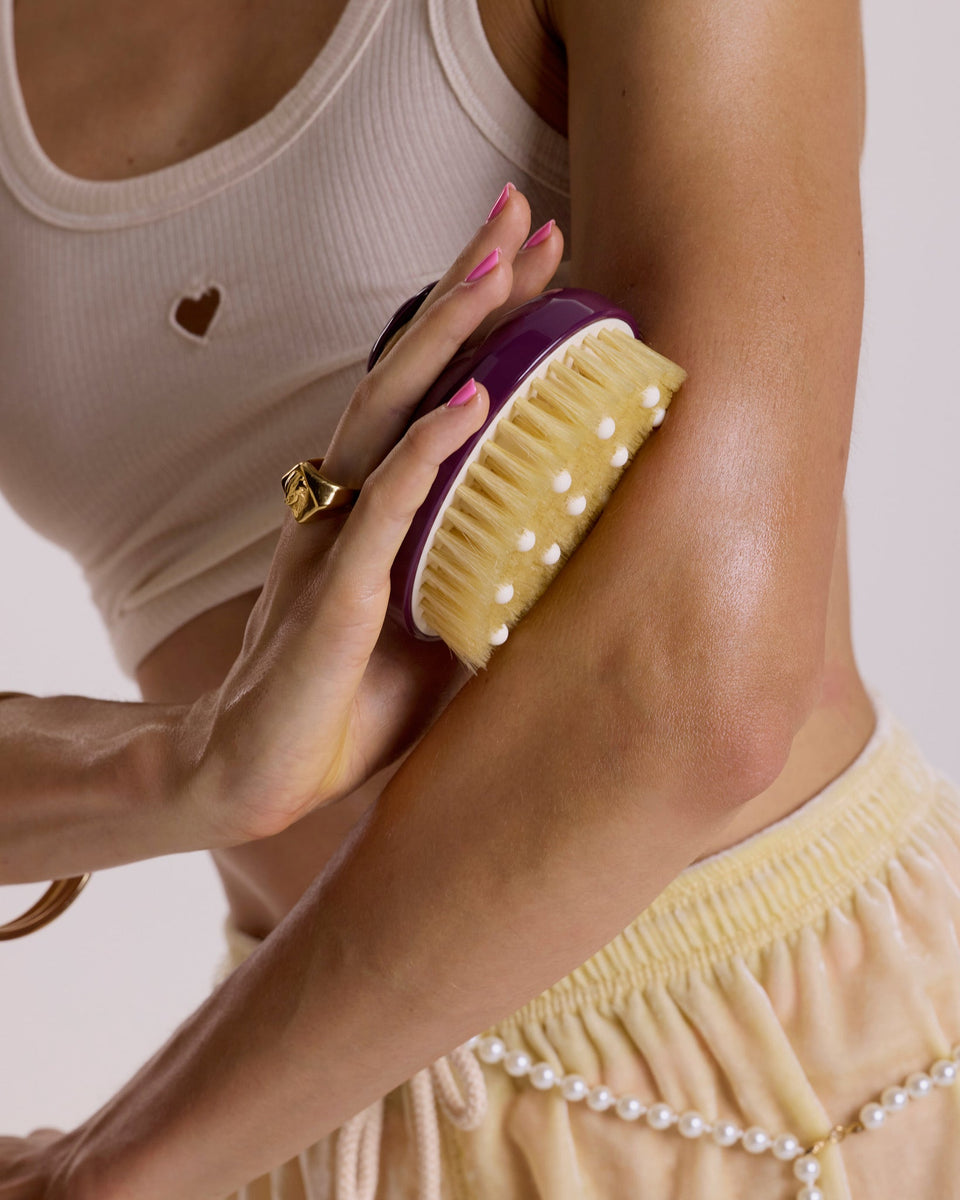
Practised for centuries across many wellness traditions, dry brushing involves massaging dry skin, without water, using a body brush. Just a few minutes a day can turn this simple gesture into a true self-care ritual and a moment of pleasure.
Its secret? A mechanical action that works on two levels. First, on the surface: the fibres gently exfoliate the skin, remove dead skin cells and refine its texture, precisely where cellulite tends to be most visible. Then, beneath the surface: brushing movements, always directed towards the heart, stimulate microcirculation and support lymphatic drainage, the system responsible for removing excess fluid whose accumulation can contribute to water retention.
With regular use, the skin appears smoother, more supple and more radiant. Above all, body brushing provides a pleasant feeling of lightness, which is precisely why it can so quickly become part of a daily ritual.
And what about lipedema? Dry brushing does not act on the specific fatty tissue associated with lipedema, and should not be presented as a treatment for it. However, when practised very gently, it can offer a soothing moment of care for skin that is often sensitive and help restore a more positive connection with a body that may be affected by the condition.
What Dry Brushing Can Do… and What It Cannot
When practised regularly and gently, dry brushing can help to:
- reduce feelings of swelling and heavy legs;
- improve the appearance of aqueous and adipose cellulite;
- smooth the skin and help maintain its suppleness.
While dry brushing is not a substitute for medical treatment, it can be incorporated as a comforting skincare ritual into a broader wellness routine. If you have lipedema, seek the advice of your doctor or physiotherapist before incorporating dry brushing into your routine.
On a daily basis, simple habits remain your best allies: stay well hydrated, move regularly and finish your shower with a cool stream of water over your legs.
How to Dry Brush: A Step-by-Step Ritual
Use your body brush on dry skin, ideally in the morning before showering. Just a few simple movements are enough, provided they are performed in the right order.
- Activate the lymphatic areas. Apply light pressure around the armpits, groin, abdomen, knees and ankles.
- Brush upwards without applying too much pressure. Start at the feet and hands, then gradually work towards the heart.
- Use small circular movements over the calves, thighs, buttocks and abdomen.
- Finish with a shower, then apply a moisturising treatment to prolong the benefits of the ritual.
Three to five minutes a day is enough. And because your brush takes care of you, take care of it too: after each use, gently tap it against a flat, hard surface. Do not clean it with water and always store it in a dry place.
Which Body Brush Should You Choose?
La Bonne Brosse offers two body brushes, each designed to provide a level of massage suited to different skin types.
Is your skin fine, delicate or prone to redness? The N.01 Body Brush, made with nylon and copper fibres, is designed for you. Also ideal for discovering body brushing for the first time, it gently exfoliates the skin without being harsh.
Looking for a more invigorating massage for normal to thicker skin? The N.02 Body Brush is your ideal ally. Its boar bristles, naturally rich in keratin, help refine the skin's texture, while its medical-grade silicone tips provide a deeper massage of the tissues, making it particularly suited to the legs, thighs, arms and buttocks.