



Ozempic hair loss: 5 ways to stimulate hair regrowth
Hair shedding has been reported by some people taking GLP-1 medications, particularly during significant weight loss. If you're noticing more hair than usual on your hairbrush a few months into treatment, you're not alone. This shedding can be alarming. Take a deep breath: in the vast majority of cases, it's temporary. Better yet, there are simple, gentle steps you can take to support your hair on its way back.
Why does Ozempic cause hair loss?
Here's the key thing to understand about Ozempic hair loss: semaglutide, the active ingredient in Ozempic, doesn't attack your hair directly. According to dermatologists, one possible explanation is telogen effluvium, a temporary form of hair shedding that can occur after significant weight loss or other physical stress. For your body, losing weight quickly is a form of stress. It responds by directing its resources toward vital functions — and hair growth doesn't make the list.
The result: an unusually large number of hairs shift prematurely into their resting phase, then shed two to four months later. This phenomenon has a name: telogen effluvium. It can be amplified by insufficient intake of protein, iron, or zinc — common when appetite drops sharply.
The good news? Telogen effluvium is reversible. Once your weight stabilizes and any deficiencies are corrected, the hair cycle finds its rhythm again. Regrowth settles in gradually over the following months.
Is Ozempic hair loss permanent? When shedding is related to telogen effluvium, it is generally temporary and hair growth can gradually resume once the trigger has resolved.
La Bonne Brosse gives you 5 tips to stimulate your hair regrowth!
1. Massage your scalp with an adapted hairbrush
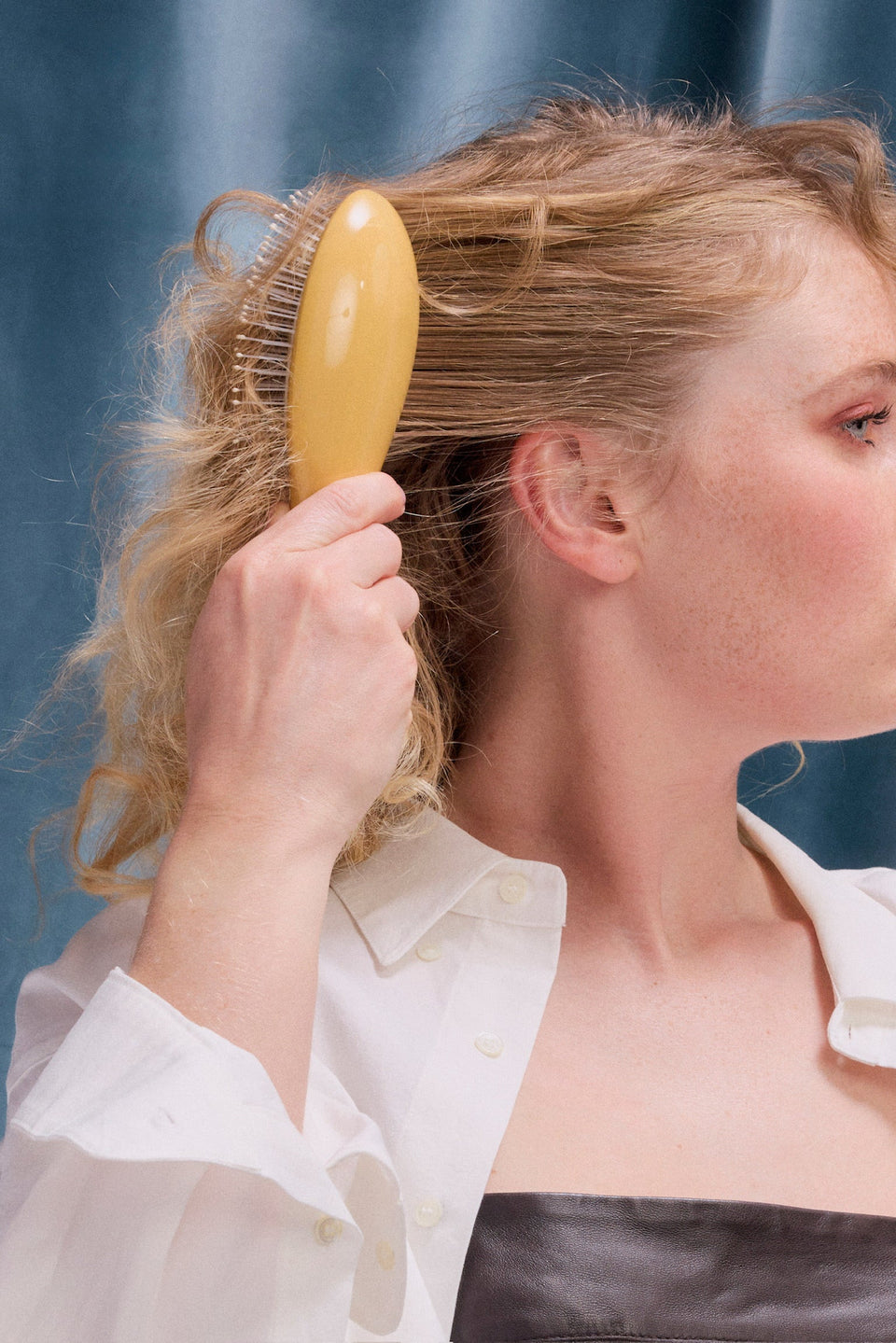
A well-nourished scalp is the starting point for healthy hair. A gentle scalp massage can help turn daily brushing into a stimulating scalp-care ritual. It also helps you care for the scalp without adding unnecessary tension to fragile lengths.
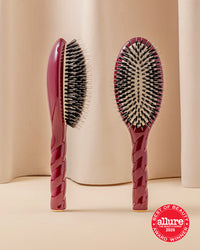
No need to spend hours on it: a few minutes of brushing is enough. Our N.04 vegan hairbrush, with its flexible nylon bristles hand-set into an ultra-soft rubber cushion, turns this simple gesture into a true wellness ritual. Used morning and night, this vegan hairbrush delivers a relaxing massage that gently awakens the scalp.
You can pair your scalp massage with the benefits of boar bristle with our N.02 hairbrush, or, if your scalp is on the sensitive side, the N.03 boar bristle hairbrush.
La Bonne Brosse tip: for a Shiatsu-style massage, brush from the center of your forehead toward the back of your head, then work your temples, and finish with your head tilted down, brushing from the nape to the crown. Slow strokes. A moment just for you.
2. Apply a fortifying scalp serum
During a shedding phase, your scalp deserves deep, targeted care. That's the role of the Cair Fortifying Serum: formulated without silicones or sulfates, it concentrates active ingredients designed to revitalize the scalp, including a caffeine complex that stimulates microcirculation and a prebiotic complex that helps preserve the balance of the scalp's microbiome.
Applied regularly, this serum works hand in hand with your massage: press it in with your fingertips or use your scalp massage brush to distribute it evenly and maximize its benefits. A simple, natural, effective duo. After 28 days of use, 100% of testers reported that their scalp felt healthier and detoxified, and that their hair felt stronger, more voluminous and healthier overall.*After 28 days, based on a study of 21 women across all hair types, tested on sensitive scalps (Source : La Bonne Brosse Data)
3. Strengthen the hair fiber with a mask
Let's be honest: no mask can make hair grow back. But during a shedding phase, every strand counts. Rich in rice water, hyaluronic acid, and plant-based actives, the Cair Repairing Hair Mask penetrates the hair cuticle to deeply nourish the fiber and make it more resistant to breakage. Your lengths stay supple and shiny — and your hair holds on to its density and radiance while regrowth takes its course.
Its little secret? It's a pre-shampoo treatment: apply it to dry or slightly damp hair, leave it on for about twenty minutes, then rinse before your usual shampoo. Once or twice a week is all it takes.
4. Feed your hair, even with a smaller appetite
On Ozempic, appetite shrinks — and sometimes, so do the nutrients your hair depends on. Hair fiber is made of keratin, a protein. Without sufficient intake, your body slows down hair production.
Three priorities on your plate: protein (eggs, fish, legumes), iron (meat, lentils, spinach), and zinc (seafood, pumpkin seeds). If your portions are smaller, make every meal count with nutrient-dense choices. And if you suspect a deficiency, blood work ordered by your doctor is always the smartest first step before any supplementation.
5. Handle your hair with extra care
When hair is shedding more than usual, every gesture matters. Adopt a gentle styling routine: on wet hair, which is more fragile, reach for a wide-tooth detangling comb that removes knots without breaking the hair fiber. On dry hair, always start brushing at the ends, then work your way up toward the roots.
Limit sources of stress, too: excessive blow-dryer heat, tight hairstyles, harsh color treatments. Your hair is going through a delicate phase — treat it kindly.
Ozempic hair loss: the takeaway
Ozempic hair loss is most often telogen effluvium: a temporary reaction to rapid weight loss that resolves once your body finds its new balance. While the hair cycle gradually recovers, gentle scalp care, adequate nutrition and practices that limit unnecessary breakage can help support the appearance and condition of your hair.
And if the shedding persists or gets worse, see a healthcare professional.
This article is for informational purposes only and is not a substitute for professional medical advice, diagnosis, or treatment. Ozempic is a prescription medication: never stop or adjust your treatment without consulting your healthcare provider.