


Dry and dehydrated hair: causes and solutions
What is dry and dehydrated hair?
Dry hair lacks natural lipids. Dehydrated hair, on the other hand, lacks water. In both cases, the hair fiber can no longer retain the hydration needed to maintain flexibility and shine.
When the hair cuticles are damaged or lifted, water escapes easily. The hair then becomes porous. This excessive porosity makes the hair look dull, harder to manage, and more prone to breakage.
The causes of dry and dehydrated hair
Several factors can explain the appearance of dry and porous hair. In many cases, it results from the accumulation of damaging hair habits.
Frequent use of heat styling tools
Hair straighteners, curling irons, and hair dryers used with hot air significantly weaken the hair fiber. Excessive heat lifts the hair cuticles and damages the natural keratin. Over time, this leads to moisture loss, increased porosity, and the development of split ends.
Daily styling at high temperatures is one of the main causes of dry hair. To preserve the hair fiber, it is essential to limit these practices and avoid excessively high heat.
Drying and stripping hair products
Some hair products contain harsh ingredients that strip the fiber and remove its natural protective oils. Styling gels rich in drying alcohols, shampoos containing aggressive sulfates, and highly chemical hairsprays can all contribute to drying out the lengths.
Repeated exposure to these ingredients causes the hair fiber to lose its ability to retain water. Hair becomes dull, brittle, and difficult to style. These damaging practices should be avoided to restore healthy hair.
Bleaching, relaxing, and perm treatments
Chemical treatments such as bleaching, relaxing, and perming deeply alter the internal structure of the hair. They lift the cuticles and weaken keratin, making the fiber more vulnerable to external aggressions.
After these treatments, hair is often more porous and drier. Without appropriate care, it can quickly become brittle and lose its natural shine.
Naturally dry hair
Hair can also be naturally dry. Curly, coily, and textured hair types, for example, are naturally more prone to dryness because the sebum produced at the scalp has more difficulty traveling down to the ends.
In this case, the goal is not to correct a mistake but to regularly provide hydration and nourishment to maintain the balance of the hair fiber.
Dry and porous hair: how to repair the fiber
Porous hair has microcracks on its surface. These cracks prevent the fiber from retaining water and nutrients. To effectively treat dry and dehydrated hair, these irregularities must be filled using hydrating and repairing ingredients.
The priority is to restore the surface of the hair in order to smooth the cuticles and strengthen natural keratin.
A repairing hair mask: essential for dry hair
To repair dry and porous hair, regular use of a repairing mask is essential. The Cair Repairing Mask works deep within the hair fiber to provide intense hydration and fill in surface cracks.
Thanks to its hydrating ingredients, it helps restore softness to the lengths, reduce breakage, and bring back shine to damaged hair. Used once or twice a week, it strengthens the fiber and visibly improves hair quality.
Adopting a natural and healthy hair routine: the repairing routine
The best solution for dry hair is adopting a healthy haircare routine that respects the hair fiber. An effective repairing routine is based on simple but essential habits.
It is recommended to use a gentle shampoo without harsh chemicals that cleanses without stripping the hair. After each wash, a hydrating treatment helps close the cuticles and protect the lengths. The repairing mask completes the routine by providing deeper care.
Reducing the use of heat styling tools and avoiding products containing drying alcohols or aggressive sulfates are also essential steps to preserve hair hydration.
Step zero: brushing, a natural treatment for dry hair
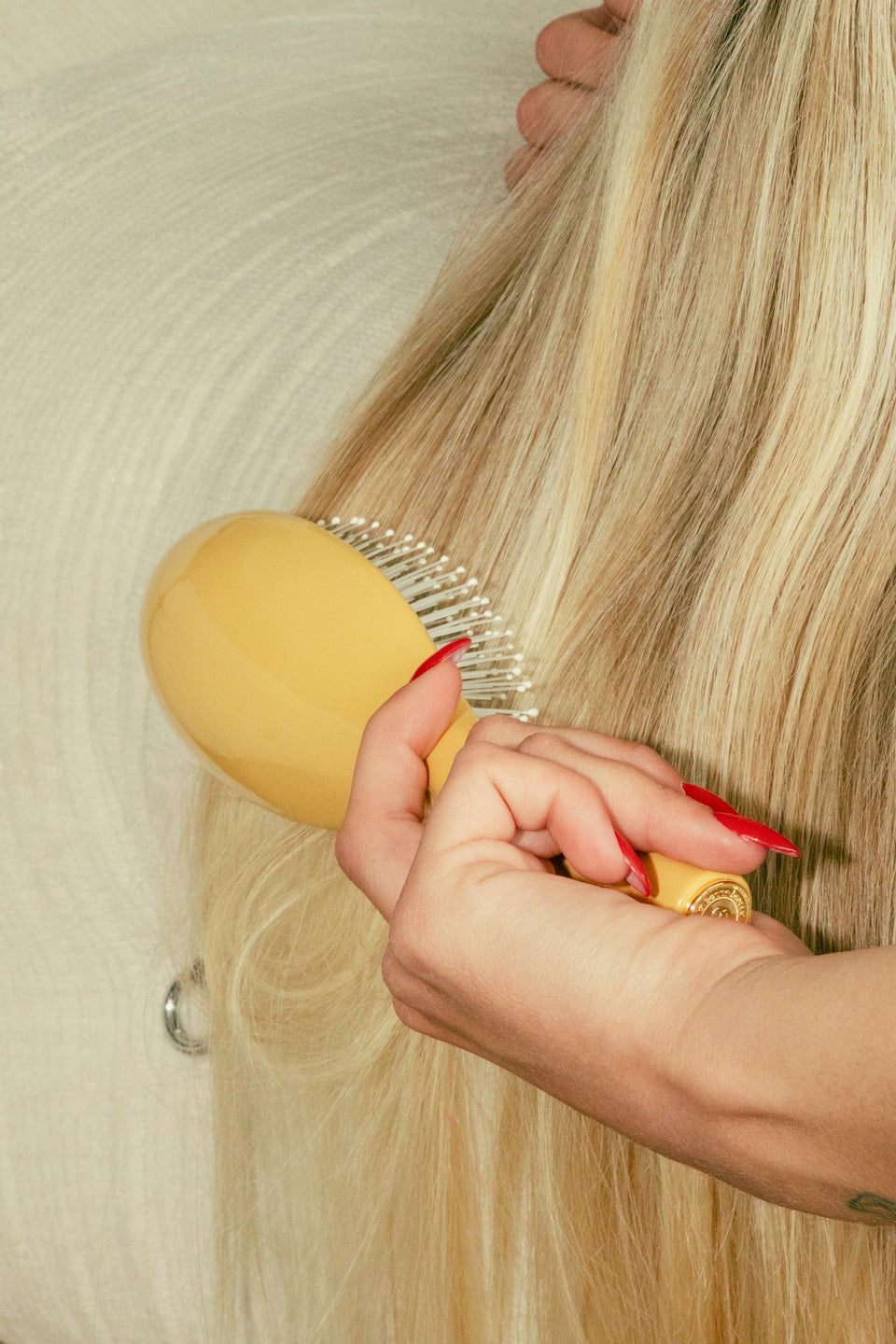
Brushing is often overlooked as a hair treatment, yet it is a fundamental step in a healthy routine. Daily brushing helps distribute the natural sebum produced by the scalp throughout the lengths.
This sebum acts as a natural treatment rich in lipids. It nourishes, protects, and adds shine to dry hair. By smoothing the cuticles, brushing also helps reduce porosity and limit frizz.
To maximize the benefits of brushing, choosing a high quality hairbrush is essential.
Why choose a boar bristle hairbrush?
A boar bristle hairbrush is particularly suitable for dry and dehydrated hair. Natural boar bristles gently capture sebum at the roots and redistribute it along the entire hair shaft.
This movement acts like a natural keratin treatment. It hydrates the lengths, protects the hair fiber, and enhances shine. Integrating the N.01 Shine & Care The Universal Boar Bristle Hairbrush into your haircare routine helps gradually strengthen hair quality and prevent dryness.