


Body Brush: Your Ally Against Water Retention and Lipedema
Water retention, cellulite and lipoedema: can dry brushing really help?
Heavy legs at the end of the day, dimpled skin, a feeling of swelling… These discomforts affect most women, at every age. One simple ritual is coming back into focus: dry brushing. But before reaching for your body brush, it helps to understand what is going on. Water retention, cellulite and lipoedema are three very different things. Knowing which you are dealing with can help you take better care of yourself.
Water retention, cellulite and lipoedema: three different conditions
Water retention: when circulation slows
Water retention occurs when fluid builds up in the tissues instead of draining away properly. Heat, long periods of standing, hormonal changes or a sedentary lifestyle can slow venous and lymphatic circulation. The result: swollen ankles, heavy legs and a feeling of tightness at the end of the day.
Cellulite: a natural and common occurrence
Cellulite, meanwhile, has to do with the structure of the skin itself. Whether linked to water retention or to fat cells, it gives skin its familiar dimpled appearance. The reassuring news: cellulite is a natural feature of the body, present in the vast majority of women. It is neither an abnormality nor a health problem, simply part of how skin works.
Lipoedema: a chronic condition that remains little understood
Lipoedema is quite different. This chronic condition involves an abnormal, symmetrical and often painful build-up of fatty tissue, mainly from the hips to the ankles, while the feet remain unaffected. Pain when the skin is pinched, frequent bruising, legs that look disproportionate to the upper body and fat that does not respond to dieting are all signs to pay attention to.
Recognised by the World Health Organization, lipoedema is still poorly identified in France, where many women spend years seeking answers before receiving a diagnosis. If these symptoms sound familiar, consult a doctor: only a doctor can diagnose the condition and guide you towards appropriate care.
Dry brushing: an age-old ritual rediscovered
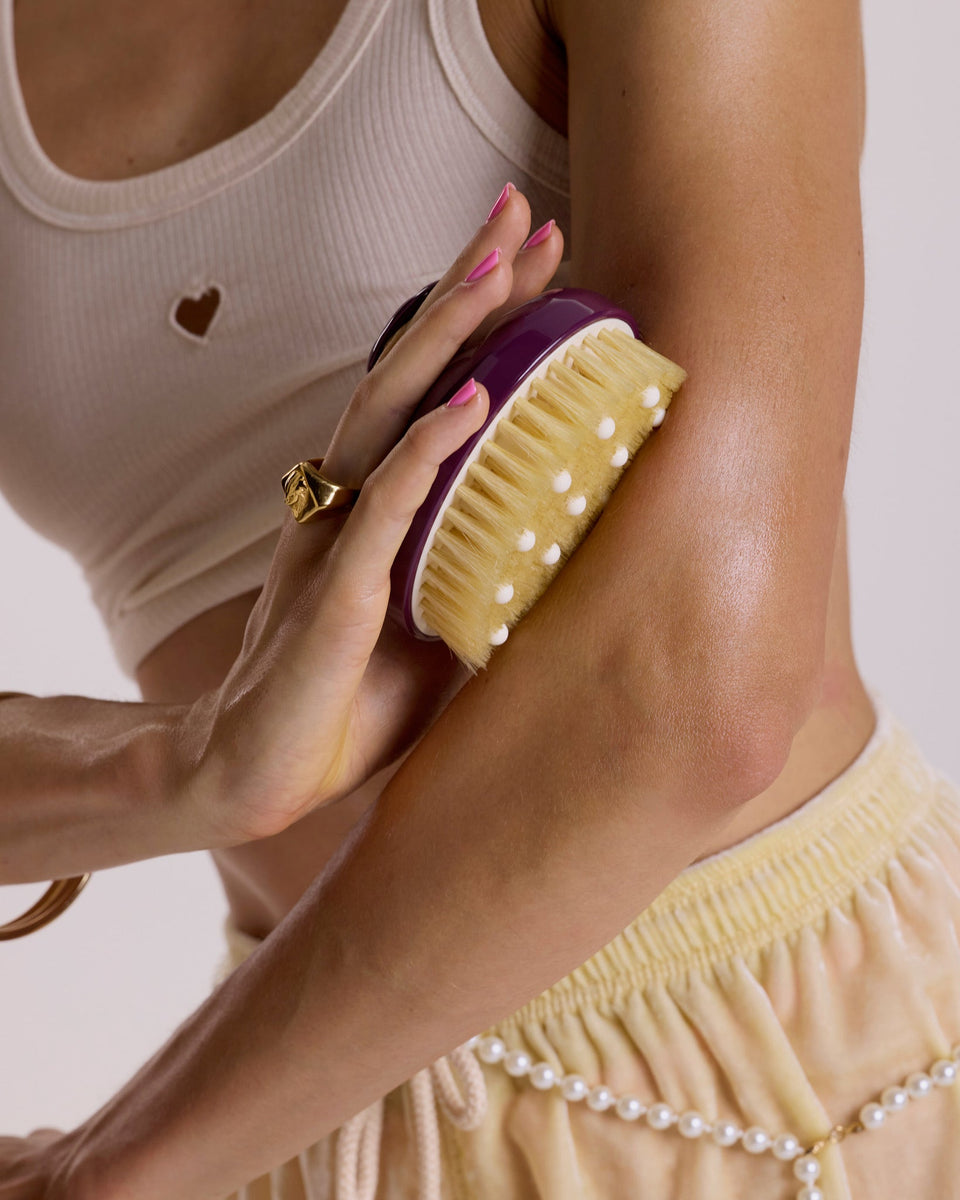
Practised for centuries in many self-care traditions, dry brushing means massaging the skin without water, using a body brush. Just a few minutes a day can turn this simple gesture into a soothing care ritual and a moment of pleasure.
How does it work? Through a mechanical action at two levels. First, at the surface: the fibres exfoliate, removing dead skin cells and refining skin texture where cellulite is visible. Then, beneath the surface: brushing strokes, always directed towards the heart, stimulate microcirculation and support lymphatic drainage. This system helps clear the fluid that, when it builds up, causes water retention.
With regular use, skin looks smoother, more supple and more radiant. Above all, body brushing brings a pleasant feeling of lightness. It is easy to see why this ritual becomes a favourite so quickly.
And what about lipoedema? Dry brushing does not act on this particular fatty tissue, so it is important not to expect that of it. When done very gently, however, it can offer a moment of comfort for often-sensitive skin and help you reconnect with a body that may have been through a great deal.
What dry brushing can do… and what it cannot
When done regularly and gently, dry brushing can help to:
- ease feelings of swelling and heavy legs;
- improve the appearance of cellulite linked to water retention or fatty tissue;
- smooth the skin and help maintain its suppleness.
Although it is no substitute for medical treatment, dry brushing can be part of a wider wellbeing routine, as a way to care for your skin and feel more comfortable. If you have lipoedema, seek your doctor’s or physiotherapist’s approval first.
Everyday habits remain your best allies: drink enough water, move regularly and finish your shower with a cool rinse over your legs.
How do you dry brush? A step-by-step ritual
Use your body brush on dry skin, ideally in the morning before your shower. Just a few strokes are enough, provided you follow the right order.
- Stimulate the lymphatic areas. Apply gentle pressure around your armpits, groin, stomach, knees and ankles.
- Brush upwards with a light touch. Start at your feet and hands, then work towards your heart.
- Use small circular movements on your calves, thighs, buttocks and stomach.
- Finish with a shower, then apply a moisturiser to extend the benefits of the ritual.
Three to five minutes a day is enough. And because your brush takes care of you, take care of it too: after each use, gently tap it against a hard, flat surface. Do not clean it with water, and store it somewhere dry.
Which body brush should you choose?
La Bonne Brosse offers two body brushes, designed to provide a massage intensity suited to each skin type.
Is your skin thin, delicate or prone to redness? La Brosse Corps N.01, made with nylon and copper fibres, is designed for you. Also ideal if you are new to body brushing, it gently exfoliates without being harsh on your skin.
Looking for a more invigorating massage for normal to thicker skin? La Brosse Corps N.02 is your ally. Its boar bristles, naturally rich in keratin, refine skin texture, while its medical-grade silicone tips massage the tissues deeply. Ideal for the legs, thighs, arms and buttocks.